Daniel Padgett
The LighthouseDaniel Padgett is a capable handyman whose place on Combe Island is provisional from the start: he comes because his dying mother longs to see it, not because he belongs there. His history combines early deprivation, a strained period of caring for her, and a growing determination to leave. During the investigation into Nathan Oliver’s death, the loss of Oliver’s blood sample makes Padgett the focus of an angry confrontation; later, Padgett offers investigators a separate observation about smoke at Peregrine Cottage.
Identity and Background
Padgett was christened Wayne; Daniel was his second name. His father ran a small printing business inherited from his own father, but a partner cheated him and the business went bankrupt. His father then died of lung cancer, having made no provision through insurance. Padgett was three and does not remember him. Afterward, he and his mother moved in with her older sister and her husband. Although the couple had no children, they did not take to the boy, and their puritanical religious beliefs made ordinary pleasures suspect. They even required him to change the name by which he was known.
His uncle taught him carpentry and decorating, skills that later made him valuable as a handyman. That practical competence stands in contrast to the bleakness of the account he gradually shared with Mrs. Plunkett: he had a difficult childhood, and, in her view, little seemed to go right for him afterward. His story does not reduce him to helplessness; he is good with his hands and later speaks of seeking qualifications for a better job. But the disparity between those capacities and the precarious work available to him helps explain why being treated as an expendable odd-job man rankles.
Arrival on Combe Island
At the end of June 2003, Padgett wrote to Rupert Maycroft asking whether there was work for a cook and handyman. The island did not need another cook, but Mrs. Plunkett had suggested that extra help would be welcome, and the existing handyman was about to retire. Maycroft found the letter persuasive and accompanied by a reference, and took Padgett on. He later judged the appointment a mistake—not because Padgett lacked skill, but because the circumstances that brought him and his mother to the island had not been disclosed.
Padgett’s mother was already gravely ill and had only months to live. As a child, she had spent August holidays with her parents in Pentworthy and longed to see Combe Island, which she could not visit then. Over time the island became a romantic refuge in her imagination; when she knew she was dying, she was determined to come. Padgett agreed because he did not want to refuse her. Mrs. Plunkett later said that the two of them had been wrong not to tell Maycroft how sick she was when they applied for the jobs.
Much of Padgett’s time was spent caring for his mother rather than doing his own work. Joanna Staveley and, at times, Mrs. Burbridge helped; toward the end, Joanna returned from London and took over the nursing, while other women on the island also assisted. Mrs. Plunkett recalled that Padgett did little of his work during his mother’s final month and believed that he came to resent her. After his mother died, Padgett asked for a lock of her hair. Mrs. Plunkett went to find an envelope; she remembered him tugging the lock out and seeing an expression she did not read as loving. Her account complicates the image of a dutiful son: care, obligation, grief, and resentment coexist, though the scene cannot establish all that he felt.
Work, Belonging, and the Loss at the Harbour
Padgett proved an excellent handyman, but Rupert Maycroft understood that he disliked island life. Mrs. Burbridge’s remark that he was not really an islander captures the social distance around him: on Combe, belonging carried weight, and his mother’s attachment to the place had never become his. Mrs. Plunkett likewise said he had not felt at home there and expected him to leave once his mother was gone.
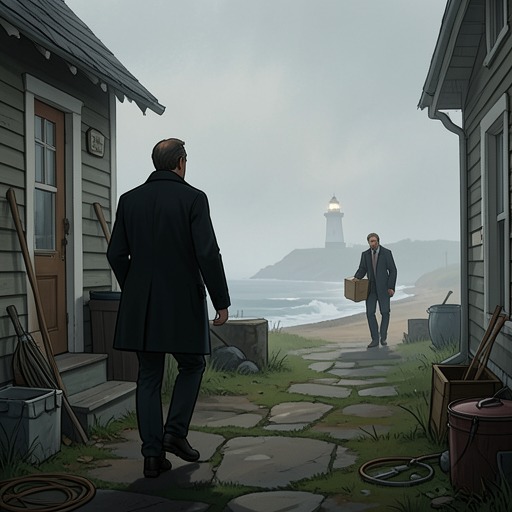
That distance becomes visible in the harbour confrontation over a lost load. Padgett stood pale and pressed against the cabin wall while Jago Tamlyn unloaded the launch and Nathan Oliver waited rigid with fury. Jago reported that Mrs. Burbridge’s library books, shoes and handbags belonging to Mrs. Padgett that Padgett was taking to the Oxfam shop, and Nathan Oliver’s blood sample had gone overboard. Oliver’s rebuke made the contrast pointed: he mocked the ranking of the library books and charity-shop goods as more serious losses than having to give blood again, then insisted that Padgett answer for what had happened. The scene establishes the loss and Oliver’s accusation of fault; it does not give Padgett a response explaining how it occurred.
Departure Plans and the Investigation
After his mother’s death, Padgett moved from the stable block into one-bedroom Puffin Cottage, between Dolphin Cottage and Atlantic Cottage on the north-west coast. When Kate Miskin and Francis Benton-Smith came to see him, he opened the door immediately and stood aside without speaking. Benton observed a sitting room with little sign of personal activity: a few paperbacks, china figurines, heavy oak furniture, and a patchwork-covered divan beneath the window. The room was bare of much else, and its three windows were shut. These are the investigators’ observations, not proof of what Padgett did or how he felt at home.
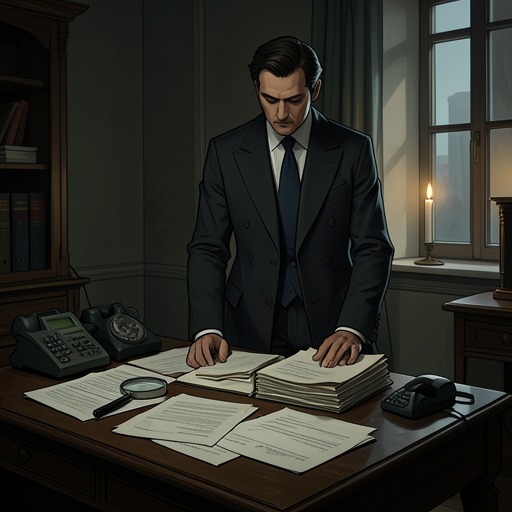
Padgett was not planning to stay. His mother had left him some money she had saved, and, according to Mrs. Plunkett, he intended to go to London for training and had applied for a degree course at one of the new universities. In his own account to the investigators, he wanted to start a new life, become qualified for a proper job, and do better than odd jobs. Francis Benton-Smith recognized the self-pity and truculence in his manner but cautioned himself that neither made Padgett a killer. The distinction matters: the narrative presents his resentment and his precarious prospects as context, not as proof of guilt.
When asked whether there was anything else he wished to tell them, Padgett mentioned smoke. He said he had been in the bedroom, looked out of the window, and seen smoke, leading him to think someone had been up and about in Peregrine Cottage and lit a fire. The observation supplies investigators with a specific sighting and place, but this evidence does not identify who was there. Padgett’s characterization therefore remains unresolved in the available account: a skilled worker who feels undervalued, a son whose care for his mother carried resentment as well as duty, and a witness whose brief report adds a clue without, by itself, settling what happened.